Window screens serve a fundamental role in ventilation, pest control, and environmental protection. However, not all screens are engineered the same. The distinction between standard and heavy-duty window screens lies in their structural design, material composition, and performance under stress. Understanding these differences helps homeowners, builders, and facility managers select the right screen for durability, safety, and long-term value.
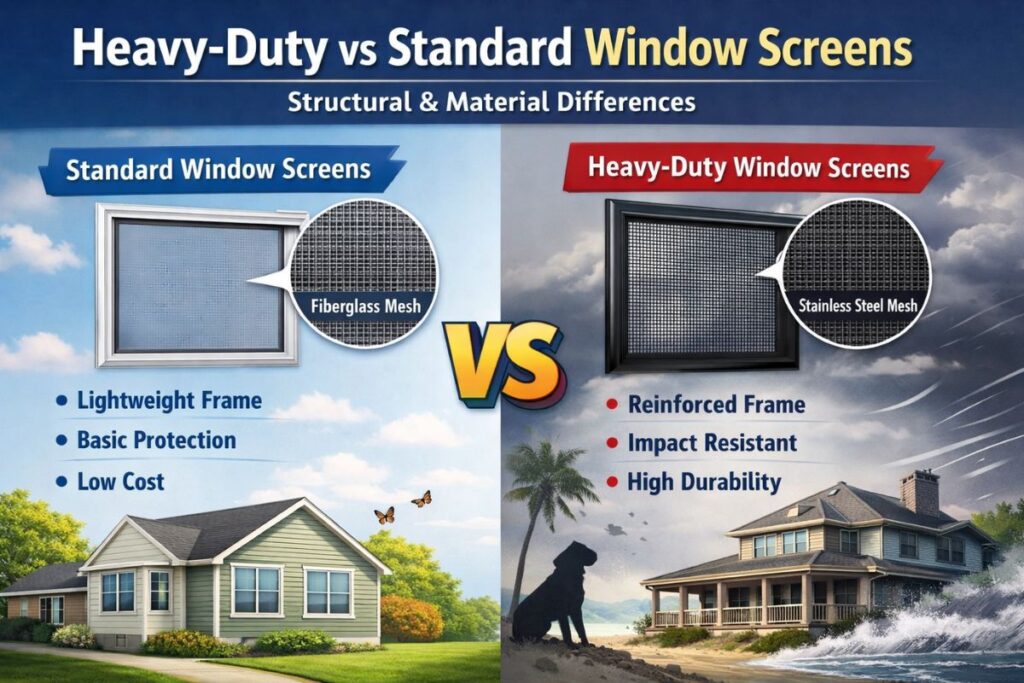
Overview of Standard Window Screens
Standard window screens are the most common type used in residential properties. They are designed primarily for airflow and insect prevention, with a focus on affordability and ease of installation.
Structural Design
Standard screens typically feature:
-
Roll-formed aluminum frames
-
Thin frame profiles (usually 5/16″–7/16″ thick)
-
Plastic or light metal corner connectors
-
Basic spline channels to hold mesh in place
These frames are lightweight and easy to remove for cleaning or replacement but offer limited structural rigidity.
Mesh Materials
Common mesh materials include:
-
Fiberglass mesh: Flexible, inexpensive, and corrosion-resistant
-
Aluminum mesh: Slightly stronger but prone to bending or denting
-
Polyester mesh: More durable than fiberglass but still lightweight
Most standard screens use an 18×16 mesh weave, balancing airflow and insect blocking.
Performance Characteristics
-
Suitable for low-impact environments
-
Adequate for mild climates
-
Minimal resistance to pets or debris
-
Shorter lifespan compared to reinforced options
Standard screens work well in typical residential settings where physical stress is minimal.
Overview of Heavy-Duty Window Screens
Heavy-duty window screens are engineered for higher structural loads, durability, and impact resistance. They are often used in high-traffic homes, commercial buildings, and regions with harsh weather conditions.
Structural Design
Heavy-duty screens incorporate stronger construction methods:
-
Extruded aluminum or steel frames
-
Thicker frame profiles (often 1″ or more)
-
Reinforced or welded corners
-
Screw-fixed or security mounting systems
Extruded frames provide greater rigidity and reduce the risk of bending or warping over time.
Similar Link: The Ultimate Guide to Buying the Perfect Window Screen
Mesh Materials
Heavy-duty screens use high-strength mesh options:
-
Stainless steel mesh: High tensile strength and corrosion resistance
-
Pet-resistant polyester mesh: Thick, tear-resistant coating
-
Security mesh: Fine woven steel for impact and intrusion resistance
These meshes are significantly thicker and more durable than standard fiberglass.
Performance Characteristics
-
High resistance to tearing and denting
-
Suitable for homes with pets or children
-
Better performance in coastal or high-wind areas
-
Longer service life and reduced maintenance
Heavy-duty screens are designed to handle repeated stress and environmental exposure.
Structural Differences in Detail
Frame Engineering
Standard frames use roll-formed aluminum, which is lightweight but flexible and commonly found in basic residential screen assemblies. In contrast, heavy duty sliding screen doors and other heavy-duty systems use extruded aluminum or steel, providing greater structural strength and resistance to deformation. Extrusion allows thicker walls and internal reinforcement channels, improving overall rigidity and load tolerance, especially for large sliding openings and high-traffic entry points.
Impact Resistance
Heavy-duty screens—including heavy duty sliding screen doors—are engineered to withstand:
Standard screens are not designed for repeated impact or heavy loads and may deform under sustained stress.
Material Durability Comparison
| Feature |
Standard Screens |
Heavy-Duty Screens |
| Frame strength |
Low to moderate |
High |
| Mesh durability |
Moderate |
High |
| Impact resistance |
Minimal |
Strong |
| UV resistance |
Moderate |
High |
| Pet resistance |
Low |
High |
| Typical lifespan |
3–7 years |
10–20+ years |
| Cost |
Lower upfront |
Higher upfront |
Material thickness and alloy quality significantly affect corrosion resistance and fatigue life, especially in coastal or humid climates.
Cost vs Long-Term Value
Standard screens have a lower initial cost but may require frequent replacement. Heavy-duty screens cost more upfront but typically deliver better lifecycle value due to extended durability and reduced maintenance.
From a property management perspective, heavy-duty screens can be more cost-effective over time in high-use or harsh environments.
When to Choose Standard Screens
Standard screens are appropriate when:
-
Budget constraints are a priority
-
Windows are rarely exposed to impact
-
No pets or heavy environmental stress
-
Mild climate conditions
They remain a practical and economical choice for most basic residential needs.
When to Choose Heavy-Duty Screens
Heavy-duty screens are recommended when:
-
Homes have pets or active households
-
Properties face strong wind or debris
-
Coastal or extreme weather exposure is common
-
Enhanced durability or security is required
-
Commercial or multi-unit buildings need long-lasting solutions
They provide superior strength and longevity for demanding conditions.
Read More: How to Secure Your Home on a Budget with Security Screen Doors
Conclusion
The decision between heavy-duty and standard window screens should be based on structural requirements, environmental exposure, and expected lifespan.
-
Standard screens offer affordability and adequate performance for low-stress environments.
-
Heavy-duty screens provide enhanced strength, durability, and long-term reliability.
Evaluating usage patterns, climate conditions, and maintenance expectations will help determine the most effective screen type for any property.

