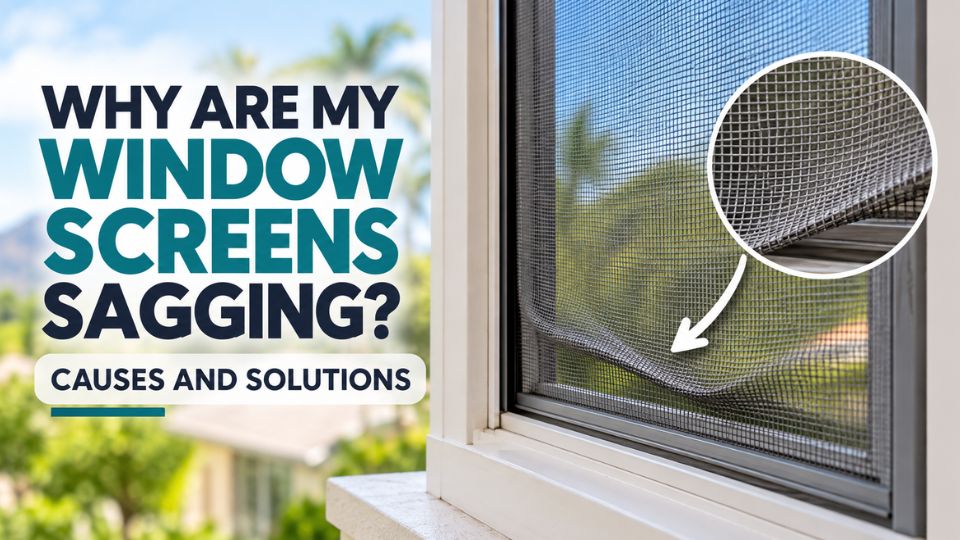
A window screen should sit securely within its frame and maintain a relatively flat, even surface. If your screen has started to sag, bow, or develop a loose section of mesh, it may be a sign that the screen frame, mesh, spline, or installation needs attention.
Sagging window screens are more than a cosmetic issue. A loose screen can reduce ventilation, create gaps where insects can enter, and eventually lead to further damage.
The good news is that the cause is often easy to identify. Here’s what can cause a window screen to sag and what you can do about it.
What Causes Window Screens to Sag?
Several factors can cause a window screen to lose its shape or tension.
1. The Screen Mesh Has Become Loose
One of the most common causes is stretched or loose mesh.
Window screen mesh is installed under tension and held in place by a narrow piece of material called spline. Over time, the mesh can lose tension because of age, repeated handling, temperature changes, or physical pressure.
When the mesh is no longer tight, it may begin to sag toward the center of the screen.
Solution:
If the frame is still in good condition, replacing and properly tensioning the screen mesh may solve the problem. The existing spline may also need to be replaced if it has become damaged or hardened.
2. The Screen Frame Is Bent
A screen can appear to sag even when the mesh itself isn’t the main problem.
Aluminum screen frames can bend when a screen is dropped, pushed against, improperly stored, or forced into a window opening. Even a relatively small bend can prevent the mesh from staying properly tensioned.
Look at the frame from different angles. If one side appears bowed or the corners no longer form a square, the frame may be damaged.
Solution:
Minor bends may sometimes be corrected, but severely damaged or distorted frames are usually better replaced.
3. The Screen Is Too Large for the Opening
A properly fitted window screen should sit securely in its opening.
If the screen is the wrong size or the frame has been incorrectly measured, it may not have adequate support. This can cause movement, gaps, or uneven pressure on the frame and mesh.
A poorly fitted screen may also rattle when the window is opened or closed.
Solution:
Check the dimensions of the screen and window opening. If the screen doesn’t fit correctly, a properly sized replacement screen may be necessary.
4. The Spline Has Become Loose or Damaged
The spline is the flexible cord that holds the screen mesh inside the frame channel.
Over time, spline can become brittle, compressed, loose, or damaged. When that happens, the mesh can gradually pull away from the frame.
You may notice the problem first around the corners or along one section of the frame.
Solution:
Removing the old spline and reinstalling the mesh with new spline can restore the proper tension. The correct spline diameter is important because an incorrect size may not hold the mesh securely.
5. Repeated Pressure on the Screen
Window screens are designed to allow ventilation and keep insects out. They aren’t intended to support significant pressure.
Leaning against a screen, pushing furniture into it, pressing on it while cleaning, or repeatedly handling it can stretch the mesh or distort the frame.
Homes with children or pets may experience this problem more frequently.
Solution:
Avoid putting pressure on the screen. If the mesh has already stretched, replacing the affected section may be more practical than trying to restore its original tension.
6. Heat and Temperature Changes
Window screens are exposed to outdoor conditions throughout the year. Repeated heating and cooling can cause materials to expand and contract.
Over time, these temperature changes can contribute to changes in mesh tension or place stress on the frame and spline.
This can be particularly relevant in climates with strong sunlight and significant outdoor exposure.
Solution:
If temperature exposure has contributed to recurring screen problems, consider using a mesh and frame combination appropriate for the local environment.
7. The Screen Is Old
Sometimes the simplest explanation is age.
Screen mesh, spline, and frames don’t last forever. With years of exposure to sunlight, moisture, wind, dust, and regular handling, the materials can gradually deteriorate.
An older screen may show several problems at once:
- Sagging mesh
- Small holes or tears
- Loose spline
- Bent corners
- Corrosion or deterioration
- Poor fit
- Discoloration
Solution:
If several components are showing signs of wear, replacing the complete screen may make more sense than repairing individual parts.
Can a Sagging Window Screen Be Repaired?
It depends on what’s causing the problem.
If the frame is straight and undamaged, replacing the mesh and spline may be enough to restore the screen.
However, if the frame is bent, damaged, corroded, or incorrectly sized, replacing the entire screen may provide a better long-term solution.
A useful way to think about it is:
Loose mesh + good frame = potentially repairable
Damaged frame + loose mesh = replacement may be more practical
How to Prevent Window Screens From Sagging
Proper handling can help extend the life of your screens.
Handle Screens Carefully
When removing or installing a screen, support the frame rather than pulling on the mesh.
Avoid Pressing Against the Mesh
Don’t lean objects, furniture, or people against the screen.
Inspect the Spline
During routine cleaning, look for sections where the spline appears loose or has pulled away from the frame.
Keep Screens Properly Installed
A screen that doesn’t fit correctly can move around and place additional stress on the frame and mesh.
Address Small Problems Early
A small loose section can become a larger problem if it isn’t addressed. Inspect the screen when you notice movement, gaps, or changes in tension.
When Should You Replace a Sagging Window Screen?
Repair may not be worthwhile if the screen has multiple problems.
Consider replacement when:
- The frame is significantly bent.
- The corners have separated.
- The mesh is badly stretched.
- The spline no longer stays in the channel.
- The frame has significant corrosion or damage.
- The screen no longer fits the opening.
- Multiple repairs have already been attempted.
A properly fitted replacement screen can restore the appearance and functionality of the window while helping keep insects outside.
Why Proper Screen Fit Matters
A window screen isn’t simply a piece of mesh placed over an opening. The frame needs to be correctly sized, the mesh needs appropriate tension, and the screen needs to sit securely within the window.
If any of these components are incorrect, the screen can become loose or develop gaps.
For homeowners replacing damaged or aging screens, a properly measured and professionally fitted screen can help prevent many of these problems.
Get the Right Window Screen for Your Home
A sagging screen doesn’t necessarily mean that the entire window needs to be replaced. In many cases, the problem is limited to the mesh, spline, frame, or fit.
The first step is identifying what’s causing the sagging. Once the underlying issue is known, you can determine whether the screen needs a simple repair or a complete replacement.
If your window screens are damaged, loose, bent, or no longer fitting properly, window screens and screen doors from Screens & Things can provide a suitable replacement or upgrade.

