Choosing between fiberglass vs. aluminum window screen mesh can affect your home’s visibility, ventilation, durability, and maintenance needs. Both materials provide insect protection, but their differences make each suitable for different household requirements. This guide compares their features, advantages, limitations, and suitability for homes in Hawaii.
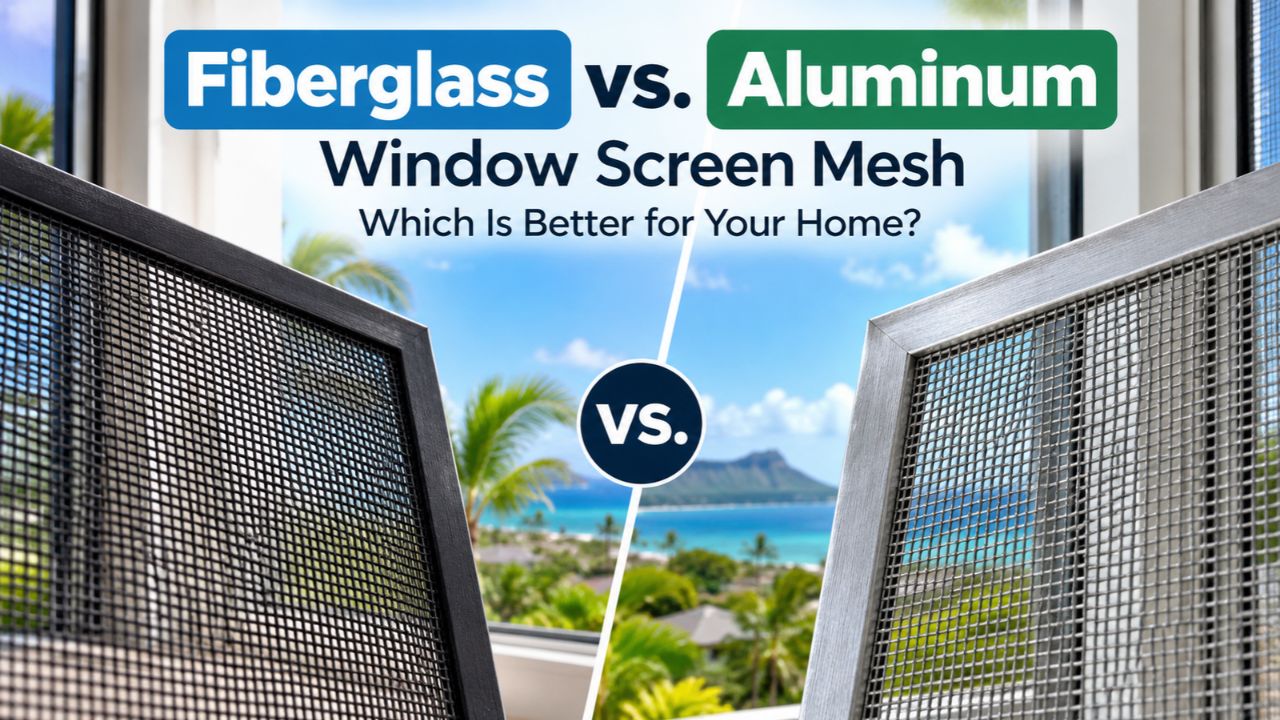
What Is Fiberglass Window Screen Mesh?
Fiberglass window screen mesh is typically made from woven glass-fiber strands coated with vinyl. It is a common choice for residential windows because it is flexible, relatively affordable, and suitable for everyday insect screening.
Its flexibility makes it relatively easy to handle during installation and replacement. Dark-colored fiberglass mesh can also provide good outward visibility while allowing fresh air to circulate.
Benefits of Fiberglass Screen Mesh
- Affordable: Standard fiberglass mesh is often less expensive than aluminum alternatives.
- Flexible: It is generally easy to handle during screen installation and replacement.
- Good visibility: Dark mesh can offer a clear outdoor view with relatively little distracting glare.
- Everyday ventilation: Its open weave allows air to circulate while helping keep insects outside.
- Does not rust: Fiberglass itself does not rust, although its coating and surrounding frame can deteriorate over time.
Potential Drawbacks of Fiberglass Mesh
Standard fiberglass mesh can stretch, tear, or become damaged when exposed to sharp objects, repeated pressure, or rough handling. It may not be ideal for openings that experience frequent physical contact.
Its lifespan depends on mesh quality, coating, sunlight exposure, installation, and maintenance. For homes with pets, a purpose-designed reinforced mesh may be more suitable than standard fiberglass screening.
What Is Aluminum Window Screen Mesh?
Aluminum window screen mesh consists of woven aluminum wire. Compared with flexible fiberglass, it provides a more rigid construction and can maintain a taut appearance when properly installed.
Aluminum screening is worth considering when you prefer a metal mesh that holds its shape during normal use. However, aluminum can develop dents or permanent creases if it is bent or struck.
Benefits of Aluminum Screen Mesh
- Rigid construction: Aluminum mesh can maintain its shape when correctly fitted.
- Resistance to tearing: Depending on its wire gauge and construction, it can resist some forms of everyday damage better than standard fiberglass.
- Versatile applications: Different mesh configurations are available for residential window screening.
- No iron rust: Aluminum does not develop iron rust, although it can still corrode under certain environmental conditions.
- Metallic appearance: Its finish can complement a variety of window frames and home designs.
Potential Drawbacks of Aluminum Mesh
Aluminum mesh can retain dents, bends, or creases after an impact, affecting its appearance. Depending on the product and supplier, it may also cost more than standard fiberglass mesh.
Coastal conditions require additional consideration. Salt deposits, damaged finishes, incompatible metals, and installation details can influence aluminum’s long-term performance.
Fiberglass vs. Aluminum Window Screen Mesh: Main Differences
Both materials provide insect screening, but their construction and practical performance differ.
| Feature |
Fiberglass Mesh |
Aluminum Mesh |
| Material |
Vinyl-coated glass-fiber strands |
Woven aluminum wire |
| Flexibility |
More flexible |
More rigid |
| Resistance to tearing |
Can tear under pressure or sharp contact |
Often resists tearing well, depending on construction |
| Impact damage |
May stretch or tear |
May develop permanent dents or creases |
| Visibility |
Often good with dark mesh |
Depends on wire thickness, mesh pattern, and finish |
| Airflow |
Depends on mesh openness |
Depends on mesh openness |
| Maintenance |
Inspect for tears, stretching, and coating wear |
Inspect for dents, finish damage, and corrosion |
| Cost |
Often more affordable |
May cost more than standard fiberglass |
| Common application |
Everyday residential insect screening |
Residential screening where rigid mesh is preferred |
Neither material is automatically better in every category. Mesh density, wire or strand thickness, color, coating, frame design, and installation quality can all influence the result.
To compare available products and mesh types, visit the Screens & Things screen mesh collection.
Which Material Offers Better Visibility and Airflow?
Visibility and airflow are important when choosing window screen mesh, especially in Hawaii, where homeowners may want to enjoy natural ventilation.
Outward Visibility
Fiberglass mesh, particularly charcoal or black, can provide a relatively unobstructed outdoor view with limited distracting glare.
Aluminum mesh can also offer good visibility. The result depends on wire thickness, mesh pattern, finish, and surrounding light conditions.
If visibility is a priority, compare actual samples against your window rather than choosing solely by material name.
Airflow
Both fiberglass and aluminum screens allow air to pass through their openings. Actual airflow depends on the mesh’s open area, density, strand or wire thickness, and overall design.
A finer mesh may help block smaller insects but can restrict airflow compared with a more open weave.
For more information about screen performance and ventilation, read our article on how window screens improve comfort, airflow, and energy efficiency.
Which Window Screen Mesh Is More Durable?
Durability depends on the type of damage a screen is likely to encounter.
Fiberglass is flexible and suitable for ordinary residential use, but it can stretch or tear when exposed to sharp objects, pet claws, or repeated pressure.
Aluminum provides a more rigid structure and may offer better resistance to tearing in some everyday situations. However, its susceptibility to permanent dents and creases is an important trade-off.
Before deciding, consider these factors:
- Window location: Ground-level windows may experience more physical contact than upper-floor windows.
- Household activity: Children, pets, and frequent window use can increase the likelihood of damage.
- Environmental exposure: Sunlight, humidity, salt deposits, and dirt may affect the mesh and frame.
- Installation quality: Incorrect tension, loose retaining components, or damaged frames can shorten the useful life of either material.
- Product specifications: Manufacturers offer different mesh thicknesses, coatings, and construction standards.
If pets are the primary concern, compare reinforced alternatives designed specifically for pet resistance. Standard fiberglass and aluminum mesh should not automatically be treated as pet-proof.
How Hawaii’s Climate May Affect Your Choice
Hawaii’s climate makes it important to consider more than the initial cost of a window screen. High humidity, strong sunlight, rainfall, and coastal salt exposure can influence how screen mesh, frames, and hardware perform over time.
Humidity and Coastal Salt Exposure
Fiberglass mesh does not rust, although its coating and surrounding frame may deteriorate with prolonged environmental exposure.
Aluminum does not rust like iron or steel, but it can corrode under certain conditions. Salt deposits, damaged finishes, and contact with incompatible metals can affect its long-term performance.
For homes near the ocean, check the manufacturer’s guidance on environmental suitability. Inspect the complete screen assembly, including fasteners and frames, rather than evaluating the mesh alone.
Sunlight and Outdoor Exposure
Both materials can experience wear from prolonged outdoor exposure. Fiberglass performance depends partly on its coating and UV resistance, while aluminum performance depends partly on wire quality and finish.
Inspect screens periodically for discoloration, brittle or damaged mesh, loose edges, bent wires, and corrosion.
For practical care recommendations, read our guide to maintaining window screens and screen doors.
Ventilation and Insect Protection
Natural ventilation is valuable in many Hawaii homes, but the screen must suit the insects and conditions in the surrounding area.
Both fiberglass and aluminum screens are available in different mesh patterns. If smaller insects are a concern, ask about finer mesh options and consider how tighter openings may affect airflow.
Which Window Screen Mesh Is Best for Your Home?
The right material depends on your household’s priorities, the location of your windows, and the amount of wear your screens experience.
Choose Fiberglass If You Prioritize Flexibility and Value
Fiberglass may be a suitable option if you:
- Want an economical material for standard residential windows.
- Prefer flexible mesh that is relatively easy to handle during replacement.
- Value good outward visibility with a dark mesh finish.
- Need everyday insect protection without frequent physical contact with the screen.
Consider Aluminum If You Prefer a More Rigid Screen
Aluminum may be worth considering if you:
- Prefer a more rigid mesh construction.
- Want resistance to tearing during ordinary use.
- Understand that dents and creases can remain after an impact.
- Have selected a product appropriate for your environmental conditions.
Evaluate the Entire Screen System
Before making a final decision, check the screen frame, retaining spline, fasteners, mesh specifications, and compatibility with your existing window. Even suitable mesh may not perform as intended if the frame is damaged or the screen is incorrectly fitted.
For openings exposed to frequent contact from pets or heavy everyday use, consider whether a purpose-designed reinforced mesh is more appropriate than either standard material.
Frequently Asked Questions
Is fiberglass or aluminum window screen mesh cheaper?
Standard fiberglass mesh is often less expensive than aluminum mesh. However, the final cost depends on product specifications, screen dimensions, frame condition, and installation requirements. Compare the cost of complete screen assemblies rather than mesh alone.
Does aluminum screen mesh provide better airflow than fiberglass?
Not necessarily. Airflow depends on mesh openness, wire or strand thickness, and the specific screen design. Compare the specifications of the products you are considering.
Can aluminum window screen mesh rust?
Aluminum does not develop iron rust, but it can corrode under certain conditions. Coastal salt exposure, damaged finishes, and contact with incompatible metals can affect its condition.
Is fiberglass window screen mesh suitable for pets?
Standard fiberglass mesh can be damaged by pet claws and repeated pressure. If you have cats or dogs that push against screens, consider a purpose-designed pet-resistant product and verify that it is suitable for your window or door system.
Which screen mesh is better for coastal homes in Hawaii?
Neither material is automatically the best choice for every coastal property. Consider environmental suitability, mesh construction, finish, frame and hardware materials, and maintenance requirements. Manufacturer guidance is particularly important in salt-exposed locations.
How often should window screen mesh be replaced?
There is no universal replacement interval. Inspect screens periodically for tears, loose edges, stretched mesh, bent wires, corrosion, and other signs of deterioration. Replace damaged mesh when cleaning or minor repairs will not restore its intended function.
Final Thoughts
Choosing between fiberglass vs. aluminum window screen mesh depends on your budget, visibility preferences, expected wear, and local environmental conditions.
Fiberglass offers flexibility and affordability, while aluminum provides a more rigid construction. Each material has trade-offs, so consider how your windows are used and the conditions they experience before making a decision.
For Hawaii homes, pay particular attention to coastal exposure, sunlight, ventilation needs, and the condition of the entire screen assembly.
Compare the available window screen mesh options at Screens & Things to find a product that suits your home’s requirements.

